
Uncategorized
Money Magnet Pyramid
17
Apr
Apr
Money Magnet Pyramid
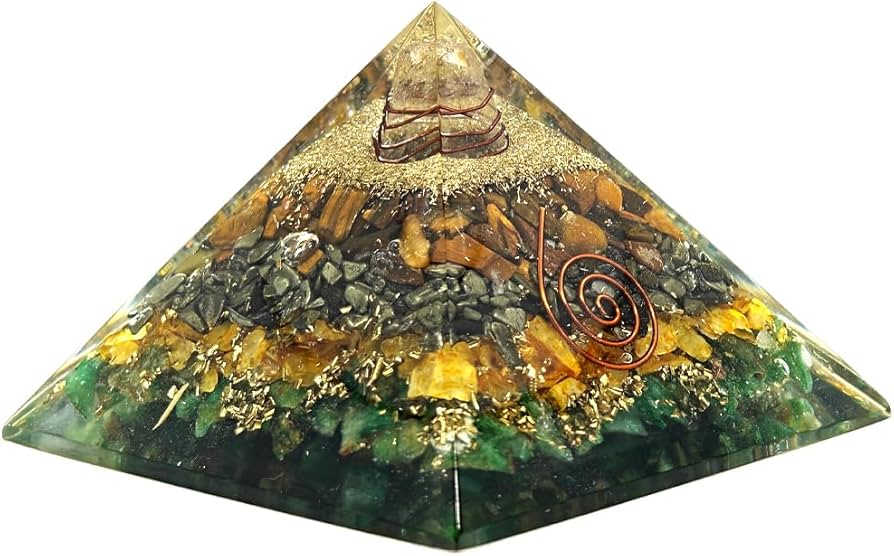
Money Magnet Pyramid refers to a metaphysical/Vastu-Feng Shui product—not a financial investment scheme. Here’s what it is:
🔮 What Is a Money Magnet Pyramid?
A Money Magnet Pyramid is a crystal energy tool rooted in Vastu Shastra and Feng Shui traditions, designed to act as a “vortex” for attracting wealth and financial opportunities.
In recent years, the Money Magnet Pyramid has gained popularity in crystal healing, Vastu Shastra, and Feng Shui communities.
Marketed as a conduit for financial abundance, this geometrically shaped object is believed to attract wealth,
clear monetary blockages, and enhance prosperity consciousness. While skeptics view it as a decorative item,
practitioners regard it as a spiritual anchor that aligns personal intention with universal energy.
This guide explores its origins, composition, usage, and the balanced perspective needed to navigate its claims responsibly.
A Money Magnet Pyramid is a three-dimensional object crafted from specific crystals, metals, or composite materials designed to amplify energy related to financial goals.
Unlike financial products or investment tools, it belongs to the realm of metaphysical wellness and sacred geometry. The pyramid shape is considered one of the oldest energy forms in ancient traditions,
symbolizing stability, ascension, and the channeling of cosmic forces. When combined with “wealth-attracting” stones,
the object is believed to create a focused vortex of prosperity that radiates into the surrounding environment. Modern versions blend traditional crystal choices with contemporary design, making them suitable for desks, altars, or living spaces.
The concept behind the pyramid rests on sacred geometry and crystal energetics. Sacred geometry suggests that certain shapes, particularly the pyramid, naturally concentrate and direct subtle energies.
Proponents believe the apex acts as a focal point, drawing in ambient energy and projecting it outward in a structured flow Money Magnet Pyramid.
In crystal traditions, minerals are thought to vibrate at specific frequencies that interact with human biofields and environmental energy.
While mainstream science does not validate these claims, the psychological impact of intentional focus is well-documented. Placing a symbolic object in a prominent location serves as a visual cue,
reinforcing positive financial habits, reducing money-related anxiety, and encouraging proactive decision-making. In this sense, the pyramid functions as both a spiritual talisman and a mindfulness tool.
The pyramid’s perceived effectiveness is largely tied to the stones embedded within or forming its structure Money Magnet Pyramid.
Green Aventurine is widely known as the “Stone of Opportunity,” believed to invite luck in career advancement and new ventures. Citrine, often called the “Merchant’s Stone,” is associated with abundance, motivation, and wealth preservation.
Its golden hue symbolizes vitality and sustained growth. Pyrite, nicknamed “Fool’s Gold,” is prized for its metallic luster and reputation as a protective shield against financial loss and scarcity mindset.
Some designs incorporate copper or brass, metals traditionally used to conduct and amplify energy. When combined, these materials are thought to create a synergistic field that supports both the attraction and retention of resources.
Proper placement is considered essential for maximizing energetic influence. In Vastu Shastra, the southeast corner of a home or office is recognized as the wealth zone and should be kept clean and energized.
Positioning the pyramid here aligns it with the fire element, symbolizing growth. Feng Shui practitioners often recommend the north sector, associated with career and life path, or the traditional wealth corner.
On a personal level, placing it on a workspace desk, near financial documents, or beside a cash box keeps prosperity intentions visible. The apex must always face upward to allow energy to flow outward.
Avoid cluttered or dimly lit areas, as stagnant environments may dull resonance. Consistency in placement matters more than frequent relocation.
Like all crystal tools, the pyramid requires periodic cleansing and intentional activation. Upon acquisition,
clear residual energies using smudging, moonlight exposure, or resting it on a selenite plate. Water cleansing works for water-safe stones, but caution is advised with porous crystals. After cleansing,
activation involves holding the pyramid, centering the mind, and stating a clear financial intention. Visualization techniques,
such as imagining golden light flowing through the structure into your life, enhance this process. Monthly recharging, especially during full moons, refreshes its vibrational field.
Regular dusting and mindful handling preserve both its physical and energetic integrity.
It is crucial to approach the Money Magnet Pyramid with balanced expectations. No crystal or geometric object can replace financial literacy, disciplined saving, strategic investing, or professional guidance.
Its true value lies in fostering a proactive abundance mindset, reducing scarcity-driven stress, and serving as a daily reminder of financial goals. Purchase from reputable sellers,
verify material authenticity, and avoid products marketed with guaranteed returns. When used alongside budgeting,
skill development, and mindful spending, the pyramid becomes a meaningful part of a holistic wealth-building practice.
The Money Magnet Pyramid bridges ancient symbolism with modern intentionality, offering a tangible reminder that abundance begins with mindset and consistent action.
While its metaphysical claims remain unproven by science, its psychological and ritualistic benefits can support personal growth and financial clarity.
Used thoughtfully, it transforms from a decorative object into a conscious companion on the journey toward sustainable prosperity.
The term “Money Magnet Pyramid” isn’t a standardized concept in finance, business, or academia, so its meaning depends heavily on the context you’re referring to. Here are the most common interpretations:
🔹 1. Spiritual / Law of Attraction Concept
In self-help, metaphysical, or “wealth mindset” circles, a money magnet refers to someone who cultivates beliefs, habits, or energy that supposedly attract financial abundance. A pyramid in this context is often used as:
- A meditation or visualization focal point
- A Feng Shui or sacred geometry object placed in the “wealth corner” (typically southeast) of a home or desk
- A symbolic representation of building wealth from a solid foundation upward
Note: These practices are subjective and rooted in personal belief. There is no scientific evidence that physical objects or mindset techniques alone generate income.
🔹 2. Financial Education Framework
Some coaches or courses use a pyramid model to teach wealth building, with layers like:
- Base: Budgeting, emergency fund, debt management
- Middle: Investing, skill development, income growth
- Top: Passive income, asset diversification, legacy/philanthropy “Money Magnet” may be a branded program teaching this tiered approach.
🔹 3. Physical Product (Metaphysical Market)
Copper, crystal, pyrite, or resin pyramids are frequently sold online as “money magnets.” These are decorative or spiritual items. While popular in alternative wellness spaces, they do not have proven financial or economic effects.
⚠️ 4. Potential Red Flag: Business or Investment Opportunity
If you encountered “Money Magnet Pyramid” as a program, course, or investment that:
- Promises fast, guaranteed, or passive income
- Requires you to recruit others to earn money
- Uses tiered commissions or focuses more on sign-ups than actual products/services …it may be a pyramid scheme or a high-risk multi-level marketing (MLM) model. Pyramid schemes are illegal in many countries, and even legal MLMs have high failure rates for participants. Always verify through official regulators (e.g., FTC, SEC, or your country’s financial authority) and be cautious of upfront fees, pressure tactics, or vague revenue claims.
